
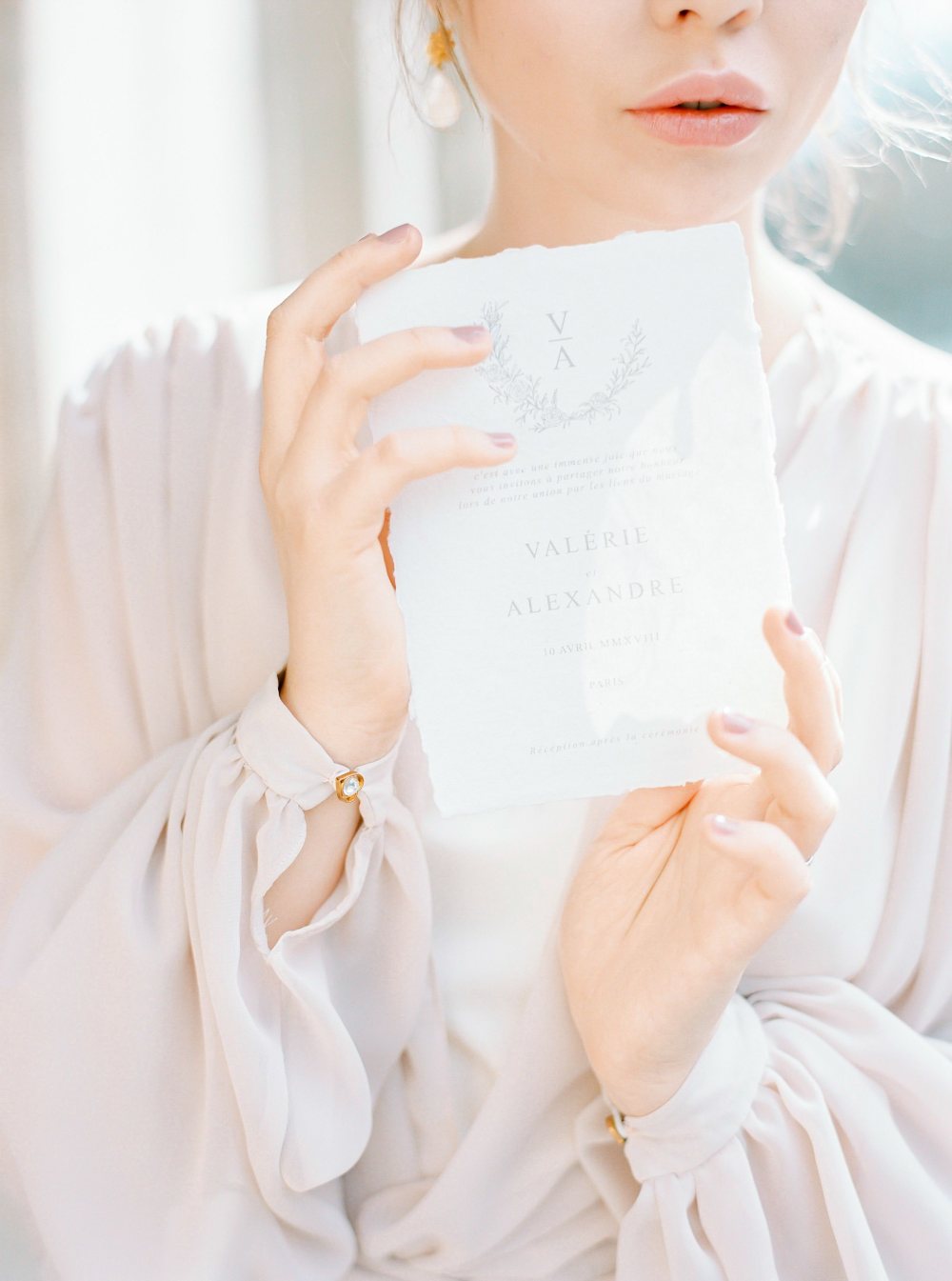
You have probably said it out loud to your partner, or at least thought it. Sending the invitations by phone would save so much money and so much posting, but a small voice worries it will look cheap. You are not imagining that voice. Couples ask this in the same words all over the wedding forums. "Would this be acceptable?" "It seems a bit naff, sorry." And on the other side, just as firmly, "I find email invitations really tacky."
So here is the honest answer, from people who build this for a living. A digital wedding invitation is not tacky. A careless one is. The medium is not the problem, the execution is. A gorgeous letterpress card can arrive in a way that feels like an afterthought, and a beautifully designed digital invitation can land like a real, personal moment. What separates the two is not paper or pixels. It is care.
This piece walks through exactly what makes an invitation feel cheap, what makes one feel thoughtful, the etiquette that keeps the whole thing classy, how to include the relatives who are not online, and the times paper genuinely is the better choice. No sales pitch, just the honest version.
The short version
- Tacky is about execution, not the medium. A generic, mass-blasted link feels cheap. A designed card sent as a private, personal note does not.
- Four things do most of the work: a real designed card, a private link that is just for that guest, a short warm message from you, and the invitation shown in the guest's own language.
- Good etiquette still applies. Give people plenty of notice, be clear about who is invited, make replying effortless, and thank them.
- Include the relatives who are not online by printing a card with a QR code, or by adding their reply yourself when they tell you in person.
- Paper still wins in a few real cases, and it is completely fine to do both.
What actually makes an invitation feel cheap
It helps to name the thing you are actually worried about, because it is rarely the format. When a digital invitation reads as tacky, it is almost always one of these.
It is a bare form. A link that opens straight onto a grey box asking for your name and a yes or no, with none of the couple, none of the date laid out with any care, none of the feeling of being invited to something. That is not an invitation, it is a survey. It would feel cheap on paper too.
It went out as a mass blast. One identical link, pasted into a group chat or a bulk email, with everyone able to see everyone else and reply on top of each other. Guests can tell instantly when they were a name in a spreadsheet rather than a person you thought about. A wedding is not a webinar.
There is no personal touch. No note, no warmth, nothing that sounds like you. Just the facts and a button. Even a single kind line changes how the whole thing lands.
None of these are caused by the invitation being digital. They are caused by rushing. The good news is that the fixes are just as simple as the mistakes.
What makes an invitation feel thoughtful
Flip each of those problems around and you have a digital invitation that feels every bit as considered as a printed one. Four things do most of the work.
A real designed card, not a form. Your guest should open something that looks like your wedding. On Laylaty you choose from a set of elegant card designs and make it yours: your names, your date and venue laid out properly, your colours, and your own photo if you want it. It is a genuine designed card, sold as a small optional add-on, not a plain reply screen. That single choice is the difference between "fill this in" and "you are invited."
A private link that is just for them. This is the quiet detail that makes digital feel personal instead of mass produced. Rather than one link for the whole world, each guest gets their own private link. Their reply is tied to them, so your count stays clean, forwarded links do not let strangers wander in, and the invitation feels addressed to them specifically, the way an envelope with their name on it does. A single shareable link exists too, which is lovely for a casual gathering, but for a wedding the private, per-guest link is what keeps it feeling intentional.
A warm message from you. The thing a bare form never has is your voice. A sentence or two, in your own words, telling them you would love to have them there. It takes a moment and it is the whole difference between a notification and an invitation.
Their own language. This is where digital quietly does something paper struggles to. If your circles span more than one language, the invitation can be shown to each guest in theirs. You choose which languages to offer, and a guest can switch with a tap, so your grandmother reads the whole thing in Arabic, laid out right to left the way it should be, your partner's family reads it in French, and nobody is squinting at words they cannot fully follow. As one mother of the bride put it about a single-language invite, "but we can't read it, and neither can our friends." Nobody should feel like a guest at their own family's wedding.
Tip
Before you send anything, open your own invitation on your phone the way a guest will. Read it slowly. If it makes you a little proud, it is ready. If it feels flat, add your photo, a warmer line, or a nicer card design before it goes out.
The etiquette that keeps it classy
Etiquette did not disappear when invitations moved to phones, it just carried over. Get these right and no reasonable guest will think twice about the format.
- Give plenty of notice. Send well ahead, the same as you would with paper, so people can book time off and travel. Digital being instant is not a reason to send late.
- Be clear about who is invited. Address it to the specific people, and say plainly whether children or a plus-one are included. A plus-one is simply the extra guest someone may bring, a partner or a friend, and being clear about it up front saves everyone an awkward conversation later.
- Make replying effortless. One clear question, answered in a tap, no account to create and no app to download. The easier you make it, the more people reply, and the more it feels like a gift rather than a chore.
- Say thank you. A simple confirmation the moment they reply, so they know it went through and feel acknowledged. Small touch, big difference.
- Keep it private. Send to your guests directly rather than posting the link in public. Their details and your day both stay yours.
Do these things and the invitation carries itself with exactly the manners a wedding deserves.
Respect your elders with a printed card and a QR code
Here is the objection that comes up in almost every honest conversation about this, and it is a fair one. Not everyone is online. Older relatives in particular may not use a smartphone easily, and some of them quietly feel that a message on a phone is not quite official. One person described relatives who "thought the WhatsApp wasn't official" and were waiting for a real invitation to arrive.
Take that seriously, because it is about respect, not technology. The kind answer is a small hybrid. For the relatives who prefer paper, print the designed card and hand or post it to them like always. Each card can carry a QR code, the little square barcode a phone camera reads, so if someone does want to reply online, a younger family member can scan it for them in seconds. And if Great Aunt tells you in person that she is coming, you simply add her reply yourself. Either way, every response lands in the same list, so you are never juggling a digital count and a paper one.
That is not a compromise on elegance. Printing a beautiful card for the people who would treasure it, and sending the same design digitally to everyone else, is simply meeting each guest where they are.
When paper still wins
We are not going to pretend paper never matters. It does, and it would be dishonest to say otherwise. There are real moments when a printed invitation is the better choice.
- A very formal wedding. For a black-tie evening with a traditional tone, an engraved or letterpress suite is part of the language of the day, and it sets expectations beautifully.
- A keepsake. Some couples, and some parents, want a physical card to keep in a drawer for thirty years. That is a lovely reason, and no screen replaces it.
- The relatives who genuinely prefer it. The elders we just talked about. For them, paper is not old fashioned, it is thoughtful.
None of this makes digital tacky. It just means the right answer is sometimes a printed piece, and often a graceful mix of both. Choosing paper on purpose, for a reason, is the opposite of cheap.
How to do both, tastefully
The couples who feel best about this rarely pick a rigid side. They do the tasteful hybrid, and it looks like this.
Send the beautifully designed digital invitation to most of your guests, each on their own private link, in their own language, with a warm note. Print the same card for the handful of relatives who prefer paper, with a QR code so they can still reply easily if they want to. Collect every reply, digital and paper alike, in one place, so your final headcount is one honest number rather than two lists that never quite agree.
That is the whole trick. One beautiful design, delivered the way each guest will appreciate most. Nobody feels like an afterthought, nobody is left out, and you are not doing double the work.
Frequently asked questions
Will older guests think a digital invitation is rude?
Some might, if it is the only thing they receive and it arrives as a casual message. That is exactly why the hybrid exists. Print a card for the relatives who prefer paper, keep the wording warm and proper, and give plenty of notice. Handled that way, it reads as considerate, not careless.
Does digital automatically mean cheap?
No. Cheap comes from a bare form, a mass blast, and no personal touch. A designed card sent as a private, personally worded invitation feels anything but cheap. The format is neutral. The care is what people feel.
Isn't a paper invitation more special?
It can be, and for a very formal wedding or as a keepsake it genuinely is. For most couples with guests spread across cities, languages, and generations, a well-made digital invitation is warmer in the ways that matter now, because it can speak to each guest in their language and reach them wherever they are. Special is about thought, not paper weight.
How do I make a digital invitation not look like a form?
Start with a real designed card rather than a reply screen, add your names, photo, and colours, write a short message in your own voice, and send each guest a private link instead of one link for everyone. Those four things carry almost all of the difference.
Can guests reply in their own language?
Yes. You choose which languages to offer, and each guest can view the invitation and reply in theirs, including Arabic laid out right to left and French. It is one of the clearest advantages digital has over a single printed card.
Is it expensive to try?
No. Laylaty is free for up to forty guests, which covers a small celebration from the first invitation to the final count. The designed card is a small optional add-on when you want it, and pricing is per event rather than a subscription, so you are not signing up for something ongoing.
The honest bottom line
Tacky was never about the medium. It is about whether an invitation feels like it was made for the person opening it. A rushed link is cheap on any platform. A designed card, sent privately, written in your own words, and shown in the reader's own language, is a warm and genuine way to say the most important thing you will say all year, which is simply, we would love for you to be there.
Do it with care, print a few for the relatives who would treasure them, and you can put that worried little voice to rest. Your guests will not think it is tacky. They will feel invited.